The System is Not Broken

I respect the decisions of the jurors in the Rittenhouse trial. The jury reached a verdict, but the process was flawed: the Judge was not impartial, which led in part to this outcome. He telegraphed from the onset, by way of his rulings, his racist statements about Asians, his inappropriate physical closeness to the defendant, and his conspicuous belief the defendant was innocent, We saw so many examples of actions by Judge Schroeder that communicated to the jury his support for the defendant, including having him in such a close proximity. This is highly unusual, and in 16 years as a prosecutor, I have NEVER seen this happen — it has certainly never happens with Black and Brown defendants. It raises issues of race, equality, and of judicial impartiality.

These not so subtle messages impact justice and verdicts. Judge Schroeder left any premise of impartiality at the courtroom door. 

That said, I see much deeper implications for the rule of law, race, equity, and justice in our country. Every day, defense attorneys nationwide fight to get their clients of color the same level of respect and dignity this defendant received in his trial. Prosecutors fight for  victims of color to be heard and respected. Kyle Rittenhouse blatantly benefitted from white privilege while many others in the system that are Black and Brown must overcome so much more just to be treated with a modicum of the decency they deserve, in a country that believes in the concept of “innocent until proven guilty.”

To me this case is just another example of systemic racism in our country. And it is a case that connects so many concerns —the murders of George Floyd, Ahmaud Arbery, Breonna Taylor, Elijah McCain, and the subsequent uprisings in the aftermath last summer. The procedural concerns impact, and further destroy,  the trust of some Americans in our criminal justice system. We are reminded of other cases in history including the violence the Freedom Riders, and others, faced during the first Civil Rights Movement in the 1950s and 1960s where perpetrators of violence were not held accountable. 

This case also raises issues surrounding who can, and cannot, exercise their First and Second Amendment rights. It infringes on the true use and meaning of “self defense,” and renews concerns regarding the application of ‘Stand Your Ground” as well as vigilantism. Perception is reality — and if people do not perceive the system to be fair, less people will report crimes, testify in trials, or respect the rule of law.

Judges are an elected to office. Schroeder is the longest-serving circuit judge in Wisconsin. He was first appointed in 1983 and has continuously won election since, often running unopposed. Free and fair elections are the backbone of democracy, and that includes having a choice of who sits on the bench.

I’ll conclude this message with a challenge: get involved in democracy in your community. Vote all the way down the ballot, without skipping judicial races and other less discussed races. Join or start a CourtWatch program to learn about your local judges. Help build a bench: get to know stakeholders in your community and recruit and encourage them to run for office. Get involved. Mobilize. Most importantly, whatever you do – do not sit quietly on the sidelines. Do not accept the status quo. Stay vigilant, never complacent..

 If you are neutral in situations of injustice, you have chosen the side of the oppressor.” — Archbishop Desmond Tutu

We stand in solidarity with those who are hurting today. I hope you will join me in the fight for our democracy, and to push forward equality for all in the legal system in this country.
 

Though we strobed
That we came in peace
He was already at war.
We have battled hard to be.
Nothing —
Nothing —
Can keep you safe.
Silence least of all.
Look alive, everyone.
May such a prayer,
A people,
A peace,
A promise,
Be outs.
Be right
& radiant
& real.
— Amanda Gorman

In solidarity & sadness,

M.
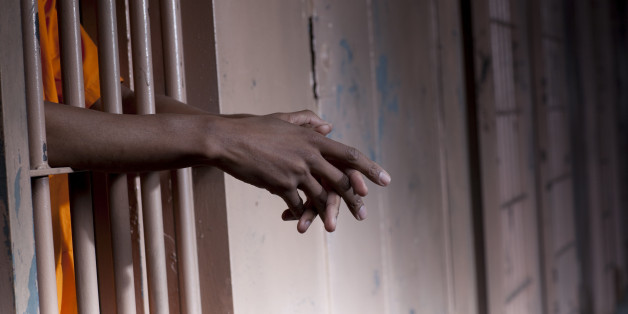
Betrayed By the Bench?

n-CRIMINAL-JUSTICE-RACE-628x314
Photo credit: ONEWORD VIA GETTY IMAGES

This morning, it was reported that Judge Stephen Millan used racial slurs as a judge.

It’s a tough pill for me to swallow.

He is someone I knew well — I practiced against him when he was a defense attorney, and before him when he became a judge. I never had an inkling of any racial animus in the way he referred to his clients or those before him.

But, there you have it — an “unnamed attorney” reported the comments two years later.

You read that right — two full years.

If you are a defense attorney, charged with protecting the interests of your clients (who, due to many systemic reasons are overwhelming black and brown), why do you sit on that information for two years?

How does one let a judge who is purportedly racist sit on the bench for two years — presiding over cases, and the fate of other black and brown people when you allegedly know the person is racist?

To give some context, judges in Miami-Dade County easily hear hundreds of cases a week. So for 104 weeks, someone who purportedly held racist views was able to affect the lives of many defendants.

It was said that the attorney feared “repercussions” — what about the repercussions to the affected persons whose life and liberty hung in the balance?

This, to me, says one of two things: either 1) the attorney did not view the conduct as that egregious; or 2) there is an ulterior motive.

This is yet another reason why diversity in the legal field is so critical.  When there are more defense attorneys, prosecutors and judges of color, we will have less instances like these.

It’s not a cure, but it’s a start.

If you are not a person of color, and want to be an ally in the struggle for racial equality, here are a few tips.

  1. Don’t condone racial slurs.  If it’s said around you, give a full-throated repudiation those statements.  Folks continue to speak that way if they think it’s ok and can get away with it.
  2. Provide evidence to help the struggle.  Take a page out of Deborah Baker-Egozi’s book, where she bravely filmed an officer using excessive force on a man of color, and offered the man legal representation.
  3. Use your voice and privilege to help the struggle. Shine a light on these issues, and raise awareness in circles that people of color do not have access to.
  4. Be aware of your own biases, and work on them.  Take the Harvard implicit association test, which helps show where your biases lie.  Once you know, work on it.  Pause before you make decisions — are you making a decision based on assumptions, stereotypes or pure hard facts?
  5. Engage with people who do not look like you. Let’s be clear — having a “black friend at work” doesn’t cut it.  You need to go to events, places of worship, and do things on your downtime that are outside of your comfort zone.  It has to be a choice for one to say s/he is fully engaged.

In this instance, I blame the judge for his comments, and the attorney for staying silent for so long.

Both are different sides of the same coin.


Sitting idly by as injustices occur is not the definition of being an ally.

It’s being part of the problem.


Celebrating Dr. King…

martin-luther-king

As we celebrate the birth of civil rights icon Dr. Martin Luther King Jr, let’s reflect on his words, and how they remain evergreen until justice is attained for all.

In the End, we will remember not the words of our enemies, but the silence of our friends

Dr. Martin Luther King lamented the silence of his friends in his letters from the Birmingham jail. He lamented those who would support him behind closed doors, but in the public forum where it really counts, he and other peoples of color stood alone.

Dr. King also was not only about racial equality, but economic equality. Many alliances were starting to be formed during that time between various races around the issue of economic empowerment; Unfortunately, the power structure at the time was designed to oppress, and in many ways, continues to do so. The common fallacy is that poverty only affects one certain segment. The reality is, if you are struggling you are struggling no matter what the race. Poor whites in Mississippi are no different than poor African-Americans in Alabama; poor whites in Milwaukee are no different than poor African Americans in New York. We must be wary of the divide and conquer tactic which has worked so well in many corners and we are seeing more of it today.

Many times during Dr. King’s walk, he was told wait.  Wait.  Give the system a chance to work.  We agree with your protests, but you shouldn’t do it in this manner.  Sound familiar? Think of today with the actions of Colin Kaepernick and sports players who choose to peacefully protest injustice by kneeling during the National anthem.  We agree with your cause, but you shouldn’t do it while we watch football.  Others are not that kind in their sentiments.

Here was Dr. King’s answer was to being told to wait, as he sat in the Birmingham jail for peacefully protesting:

But when you have seen vicious mobs lynch your mothers and fathers at will and drown your sisters and brothers at whim; when you have seen hate-filled policemen curse, kick, brutalize, and even kill your black brothers and sisters with impunity; when you see the vast majority of your twenty million Negro brothers smothering in an airtight cage of poverty in the midst of an affluent society; when you suddenly find your tongue twisted and your speech stammering as you seek to explain to your six-year-old daughter why she cannot go to the public amusement park that has just been advertised on television, and see tears welling up in her little eyes when she is told that Funtown is closed to colored children, and see the depressing clouds of inferiority begin to form in her little mental sky, and see her begin to distort her little personality by unconsciously developing a bitterness toward white people; when you have to concoct an answer for a five-year-old son asking in agonizing pathos, “Daddy, why do white people treat colored people so mean?”; when you are harried by day and haunted by night by the fact that you are a Negro, living constantly at tiptoe stance, never knowing what to expect next, and plagued with inner fears and outer resentments; when you are forever fighting a degenerating sense of “nobodyness” — then you will understand why we find it difficult to wait.

He then goes on to say “Lukewarm acceptance is much more bewildering than outright rejection.”

So what does it mean to be a true ally? What can I do?

First, listen. Listen to the concerns of marginalized people. Set aside your own feelings of defensiveness or comfort that may come from tough discussions.

Secondly, show up. If it’s a protest, march. If it’s phone banking to call your local legislator about issues of concern, do it. If it’s sending an email to your legislator, do it. Download an app like 5 calls to help you make calls to action.

Thirdly, align yourself with others who have the same concerns. Join the local chapter of the ACLU or other organization fighting these battles. Donate to the causes that mean the most to you — whether it is reproductive rights, the rights of the LGBTQ community, immigrants’ rights, or civil rights in general.

Change does not roll in on the wheels of inevitability, but comes through continuous struggle.

We know through painful experience that freedom is never voluntarily given by the oppressor; it must be demanded by the oppressed.

Listen. Show up. Align. And give a full throated repudiation to those who speak racism.  By doing this, you will keep Dr. King’s dream alive.

In Solidarity,

The RLD.

“You’re so articulate” is not a Compliment to a Woman of Color

As I watched the #BlackWomenAtWork trend on Twitter, I was given life and inspiration. African-American women from all over the country, and arguably women of color all over the world, shared examples of times that they were belittled, insulted, or otherwise demeaned for being who they are. This hashtag was in response to Representative Maxine Waters being insulted by Fox news host Bill O’Reilly as well as Press Secretary Sean Spicer’s degrading treatment of correspondent April Ryan at a White House press briefing. Both are women of color, well accomplished in their fields. 

I shared my experiences on Twitter– which were previously shared on this blog (see here) — under this hashtag,

A conservative female attorney I am acquainted with responded to my thread, saying “well, maybe it was just a compliment; you really are articulate“. Her statement is symptomatic of the deeper problem of when something is brought to the attention of some in the mainstream, often folks feel the need to dismiss it, refusing to look at the deeper issue. In my response, I encouraged her to read through the hashtag, and understand the context in which this was being shared. I noted that one of her followers indicated “Some people have a chip on their shoulder and can’t accept a compliment“.

Here’s the deal. As the saying goes, don’t urinate on me and tell me it’s raining. Human beings are intelligent enough to know when they are being complimented, and when they’re being insulted. You will never see one white attorney compliment another white attorney and say “wow, you are so articulate”. That comment is rooted in a stereotype and surprise. The stereotype is that African-Americans are uneducated, live in the hood, and cannot form complete sentences. Mainstream media and BET have not helped that cause. And certainly the demise of the Cosby show didn’t help in that either. But be that as it may, that is the stereotype. The surprise comes in “oh wow you’ve beat the odds to actually be able to speak in full sentences“. That is not a compliment. A compliment would be “wow I really liked your presentation” or even “you really articulated that point very well“. But to tell a professional woman or man of color that they are articulate is at best a backhanded compliment. Wow, people that look like you never sound that way.  It assumes of course as all stereotypes do, that you were poor, in the hood, and was never going to have a chance to succeed. That is simply not the case. If a similarly situated White person rose from poverty and made it, nobody turns to them and says oh you’re so articulate. They actually assume that the individual came from a privileged background.

The entire context of the hashtag represents the assumptions and stereotypes that are made of women of color in the workforce. Here are a couple I found telling:

These assumptions and stereotypes can be based in racism, but others can be based in implicit bias. It is the unconscious bias that one may have towards a group of people. We all have a biases; it is how we act is a different story. The key is to be aware and if someone says “this is offensive to me” don’t tell them that they have no right to be offended. You learn from the experience, and move forward as a better person. I expect someone to correct me if I did something offensive, endeavoring never to repeat that mistake again. But it is the tone deafness, or simply the lack of care for your fellow person, that makes these hashtags necessary.

At times, I wonder if it serves more of a supportive dialogue  within races rather than a dialogue between races. Only time will tell.

I would also like to take you back to some articles that highlight this issue that I’ve written in the past. Both have to do with judges of color in different parts of the country, and the bias they encountered on the street. Take a look: A Teaching Moment About Racism: The Judge and the Candidate and Racism: In Case You Weren’t Sure — Judge Attacked in Chicago

It is said never to judge a book by its cover. Everyone would be served well to follow that mantra.

IMG_4650

#TBT: Best of 2016

voting 2016


Hi RLD Family,

As we bring 2016 to a close, I wanted to share the stories on the blog that were the most popular this year. I’ve put the link to the post in the title, so go ahead and click to read it again…or for the first time if you missed it.

Let’s begin the countdown!


#5. Don’t Leave America, Fight For It!

This Presidential election definitely brought out some strong feelings — and the outcome came as a surprise to many. I shared my thoughts as to “where from here” and my resolve to fight for what is rightfully mine as an American. My forefathers planted trees on this land, and I intend to stay and enjoy the fruit of their labor.


#4. An Open Letter to Bill O’Reilly on Slavery

My response to the crazy and factually incorrect comments regarding slavery made by Fox News host Bill O’Reilly appeared in the Huffington Post. It remains the most commented on and liked piece that I have done so far.  We must be vigilant to make sure that those who wish to revise history, whitewashing it and trying to minimize the effect it had on this nation, are held to task.


#3. My Take on Police Shootings

This piece was published in the Huffington post as well. It was in response to some of the horrific shootings by police that we saw this year. Not every case merits an arrest;  if an officer can articulate legitimate reasons for being in fear, then the shooting is justified.  The focus must remain on deescalation tactics  to reduce the number of fatal shootings, and shining a light on those shootings that are not justified to ensure that everyone is equal under the law — facing consequences when the law is broken.


#2. #LoveWins: Interracial Relationship Realities

An innocent and sweet Old Navy ad featuring an interracial family drew the ire of Internet trolls. As a result of the racist backlash, many families started to post pictures showing what love is. I was no different;  not only did I post pictures of my husband and I, but I penned a piece to discuss some of the challenges that we face as a couple. At the end of the day, as long as you have a love and communication, you can overcome anything!


And the number one post of 2016 on the Resident Legal Diva is:

#1. Goodbye My Dear Friend…

This was one of the toughest pieces for me to write. Actually, writing it wasn’t that hard; reading and sharing it was the difficult part. My friend suddenly passed away earlier this year, and left a hole in my heart that can never be filled. This was a tough year for me with regards to friends and family transitioning to the next life. All we can do is cherish those we love while we have them, mourn those we have lost, and keep them alive in our hearts through our beautiful memories.

This year I also took a gander at vlogging! I did three videos — check out the links below.


So for 2017, what do you want to see on the blog? Do you want to see more articles? More Diva Talks videos? More Diva Reads where I discuss articles of interest that I have been reading?  I’d love to hear from you, sound off in the comments below.

Wishing you a happy, healthy, prosperous, and amazing New Year. I’ll see you on the flipside!

M.


createherstock-christmas167-isha-gaines
courtesy CreateHerStock