For some folks (myself included), today can be tough. If you lost your mother, mother figure, spouse/partner or as a mom – lost your child, today can be very painful. I lost my mom to cancer nine years ago. The grief has a way of creeping up on you, especially as the barrage of commercials, ads and emails pop up everywhere in the days leading up to today. Here are a few tips to help you get through.
It’s Okay. How you are feeling is valid. You don’t need to “toughen up”, and you do not need to pretend.
Unplug. Today is a really good day to stay off social media. Scrolling past happy smiling faces of families having brunch may be a lot to handle emotionally and remind you of your loss. Set the phone to do not disturb, leave it in an inaccessible place for a while, and take a break.
Find a Positive Distraction. Try binging the show that you’ve been meaning to watch on the streaming service of your choice. Watch some old DVD’s. I suggest opting out of network television because many stations do Mother’s Day themed programming. Get outside for a while. Journal. Work on that project you’ve been procrastinating for so long. Do something positive to keep yourself distracted.
Don’t Self Medicate. I’m not judging anyone for this one. However, using drugs or alcohol can make the pain you are feeling worse – and you may do something you will really regret. Also, practically speaking, tomorrow is Monday. Starting the week with a hangover – even on Zoom – is not fun.
It’ll Be Over Soon. It’s 24 hours, part of which you’ll be sleeping. You’ve made it this far. Just a few more hours!
Grief is an ongoing process that does not resolve itself overnight. It’s a rollercoaster, with good days and bad days. See a therapist if it gets too hard to cope. Check with your insurance provider if you have one. If not, there are so many apps and therapists that provide virtual sessions. One list is here.
Kudos to companies like Etsy and The Lip Bar (TLB) who sent emails allowing customers to opt out of Mother’s Day email advertisements. Having that option was definitely kind and sensitive.
I hope this is helpful. Sending you all a big virtual hug!
I hope everyone is well, healthy, and on the way to being vaccinated!!
Things have been good and hectic in my world (yes, I know, shocker!), but lots of great projects have come to my world!
This week, I was featured in the documentary “Last Day In“, which critically examines the US criminal justice system. It was a project in collaboration with several filmmakers and the hip hop artist Kodak Black, who had several high profile brushes with the law before being pardoned by the last presidential administration.
We do not speak about his case; instead, we focus on what the average, every day person encounters after being arrested, and the collateral consequences that impact entire communities for generations.
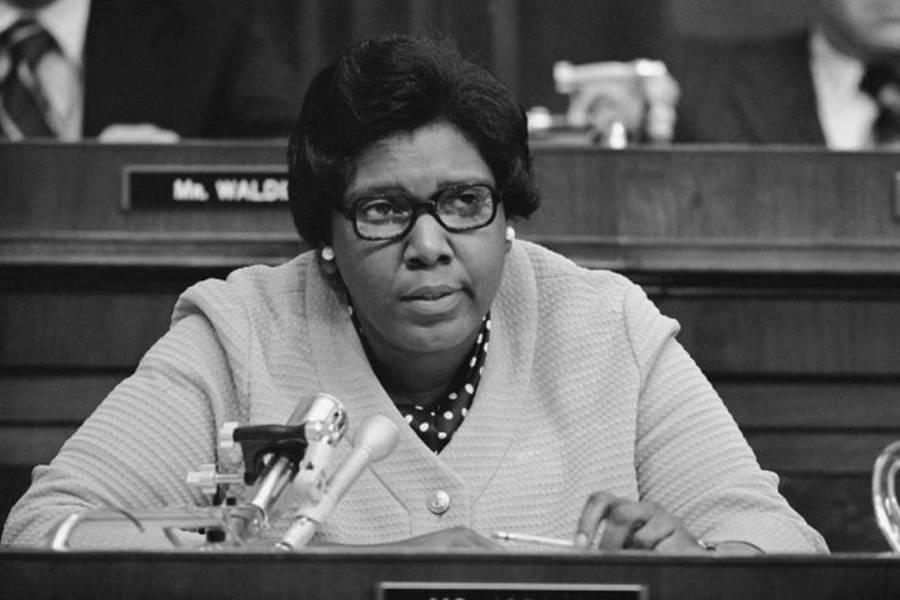
Every year for Black History Month, I highlight trailblazing female attorneys that made it possible for me to do what I do today! This year, my Legal Diva of Color is Representative Barbara Jordan, who made history on a number of levels throughout her career.
Rep. Barbara Jordan, photo credit: Associated Press
Barbara Charline Jordan was born February 21, 1936, in Houston, Texas. Her father was a Baptist minister and warehouse clerk; her mother was a maid, housewife and church teacher. Greatness was pre-ordained in her blood. Rep. Jordan’s great-grandfather, Edward Patton, was one of several Black representatives who served in the Texas legislature during Reconstruction — prior to disenfranchisement of Black Texans under Jim Crow.
Rep. Jordan attended the segregated Phillis Wheatley High School, where a career day speech by Edith Sampson, a Black lawyer, inspired her to become an attorney. Never underestimate the power of career day, and of role models to open the door to new career paths!
Her education continued as a member of the inaugural class at Texas Southern University, an HBCU (historically Black college/university) quickly created by the Texas legislature to avoid having to integrate the University of Texas. While at Texas Southern, Rep. Jordan was part of the debate team, helping them reach national acclaim. The team famously tied Harvard’s debaters when they came to Houston — a huge feat for a fledgling team, while simultaneously challenging the notion of white supremacy. She graduated magna cum laude in 1956, heading then to Boston University School of Law. Three years later, Jordan earned her law degree as one of only two African American women in her class. After passing the bars in Massachusetts and Texas, she decided to come back home to Houston, where she opened a law office.
Her pivot to public service began when Rep. Jordan volunteered for John F. Kennedy’s presidential campaign in 1960. She was a masterful organizer — driving 80% voter turnout in Harris County (which is where Houston is located). In a classic case of “if at first you don’t succeed“, she ran twice for the Texas House. The first two times she lost, but she finally won in 1966 — where she became the senator for a newly formed district. As a state senator, she worked to pass a state minimum wage law that covered farmworkers. Ever the hard worker, she co-sponsored over 70 bills.
After her success as a a state senator, Rep. Jordan ran for Congress as the Democratic nominee for Houston’s 18th District. She won, becoming the first African American woman from a Southern state to serve in the U.S. House of Representatives. She enjoyed a mentor/mentee relationship with Lyndon B. Johnson, which enabled her to be appointed to key posts such as the House Judiciary Committee. Her breakout moment came on July 25, 1974, when Rep. Jordan gave the 15-minute opening statement of the Judiciary Committee’s impeachment hearing for Richard Nixon. Her speech was a staunch defense of the U.S. Constitution and its checks and balances designed to prevent abuse of power. She said, “I am not going to sit here and be an idle spectator to the diminution, the subversion, the destruction of the Constitution.”
She further stated “I felt somehow for many years that George Washington and Alexander Hamilton left me out by mistake. But through the process of amendment, interpretation and court decision, I have finally been included in “we the people””
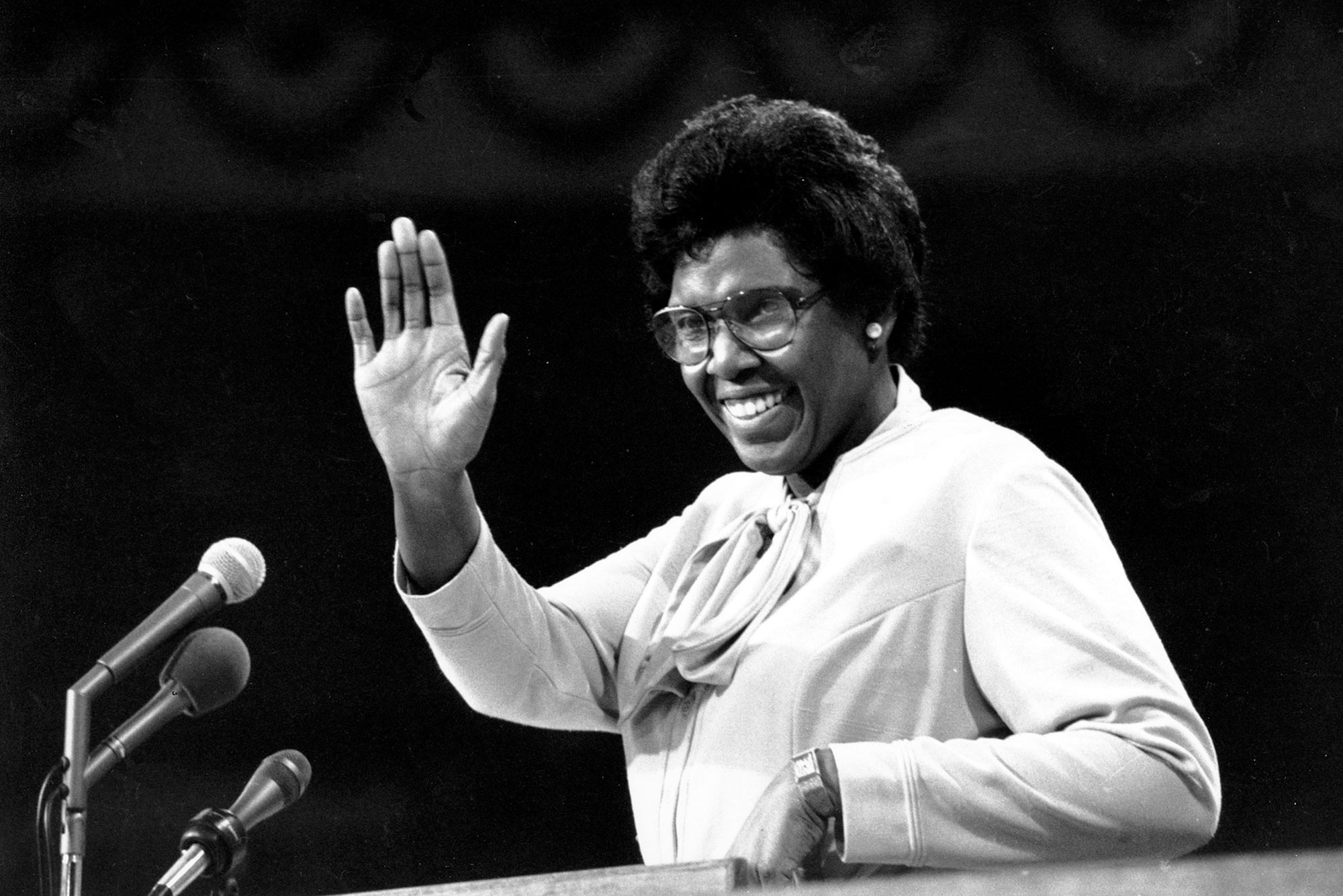
Rep. Barbara Jordan, 1974
The impeachment speech helped lead to Nixon’s resignation over the Watergate scandal and won Jordan national acclaim for her rhetoric, intellect and integrity. Her speech was so amazing that two years later, she was asked to deliver the keynote address at the 1976 Democratic National Convention— a first for an African American woman! Rep. Jordan was even floated as a potential running mate for Jimmy Carter. She turned that down — but ironically, even though she was not a candidate, one delegate was so moved by her speech that they voted for her to be the Presidential nominee.
When she was not making history, Rep. Jordan was hard at work on legislation promoting women’s rights, supported the Equal Rights Amendment and cosponsored a bill that would have granted housewives Social Security benefits based on their domestic labor. She co-sponsored close to 300 bills, many of which are still law today.
After more than a decade of service, Rep. Jordan retired from Congress in 1979 to become a professor at the Lyndon Baines Johnson School of Public Affairs at the University of Texas. It was a nice full circle moment, being able to teach at the university that she could not attend due to segregation, as well as in the school named after her mentor. She became an active public speaker and advocate, receiving 25 honorary doctorates. Her vehement opposition helped derail George Bush’s nomination of Robert Bork (who had opposed many civil rights cases) to the U.S. Supreme Court. She gave a second Democratic Convention keynote address in 1992. In 1994 then President Bill Clinton awarded her the Presidential Medal of Freedom, the country’s highest civilian honor.
Rep. Jordan died of leukemia-related pneumonia on January 17, 1996 at age 59. Breaking barriers even in death, she became the first African American to be buried among the governors, senators and congressmen in the Texas State Cemetery. Her legacy includes the main terminal of the Austin International Airport bearing her name, along with a statute of her likeness. In 2000, the Jordan/Rustin Coalition (JRC) was created, honoring Rep. Jordan and Bayard Rustin, a leader in the civil rights movement and close confidante of Martin Luther King Jr. The organization’s goal was to mobilize LGBT+ African Americans to aid in the passage of marriage equality in California. Rep. Jordan had a long term companion named Nancy Earl, who was with her until the end of her life. No public statement has ever been made about their relationship, but it is believed they were life partners.
Thank you Rep. Barbara Jordan for being a trailblazer, and a Legal Diva of Color!
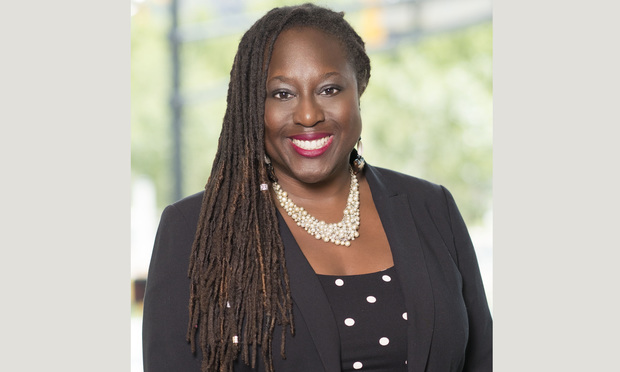
Miami criminal and civil rights attorney Melba Pearson. Courtesy photo
When South Florida’s 2020 primary elections became interlaced with concern about the county’s lack of police prosecutions, many felt it was time for a change at the Miami-Dade State Attorney’s Office.
But finding someone brave enough to actually challenge 27-year incumbent Katherine Fernandez Rundle was a different story.
Enter: former Miami-Dade prosecutor Melba Pearson, who spent a good year trying not to throw her hat in the ring.
“Nah, I’m good,” she recalls telling local attorneys, activists and survivors of crime when they’d approach her about running. Pearson searched for another candidate instead, but came up short. Months of soul searching and discussions ensued and, eventually, Pearson surprised herself.
“Running for public office was never on my list of things to do ever, ever. Just never,” Pearson said. “Because I found it invasive. You have to put yourself out there, you don’t have your privacy and people just attack you.”
She wasn’t wrong.
Two of Pearson’s online campaign events were Zoom-bombed by neo-Nazis, while some critics claimed she wouldn’t support the Black community because she’s married to a white man.
And though the election didn’t go how Pearson had hoped, as Fernandez Rundle kept her seat, Pearson said she was humbled to see how many young people were energized by her fight for change. That’s because, in Pearson’s view, it was time to take a stand after 41 years without a prosecution over an on-duty killing by Miami-Dade police officers.
“The goal is not to ignore the laws of the state of Florida,” Pearson said. “That’s not the point. But you also have to be strategic. You have to use the laws and be strategic to make sure that you’re achieving justice.”
And yet, Pearson was surprised by how many people, including attorneys in private practice, were afraid to oppose the incumbent for various reasons, with some believing, “I could get in trouble just for even talking to you.”
“To this day, it still boggles me because I don’t see it,” Pearson said.
Though many expressed a desire to support Black female candidates, Pearson said she was disappointed to find that personal interests often won out.
“I knew that politics could be a dirty game, but the hypocrisy was what I was really not prepared for,” Pearson said. “And maybe that was me being naïve but, you know, I thought, ‘I’ve watched “Scandal,” I’ve watched “House of Cards.” I think I know what to expect.’ And it’s like, oh no, people lie to your face. OK.”
‘Melba’s Run Was Important’
Quintairos, Prieto, Wood & Boyer partner Reggie Clyne was among Pearson’s supporters, outraged by the state attorney’s decision not to charge prison guards with the killing of Black inmate Darren Rainey, scalded to death in a shower. Mid-campaign, Fernandez Rundle refused a formal request from the Miami-Dade Democratic Party to resign over the move.
Clyne found ”a lot of people wouldn’t support [Pearson] because they were afraid,” but noted he’s since seen a change in the office’s approach.
“Melba’s run was important, especially for the African American community, because it brought to the fore the issue of what had happened here and why it was important that someone bring it to the light and get something done about it,” Clyne said.
Now director of policy and programs at Florida International University’s Center for the Administration of Justice, Pearson is spearheading a nationwide data project aimed at pinpointing systemic problems with efficiency and racial justice at prosecutors’ offices.
‘Steely-Eyed Determination’
Pearson grew up in New York with Caribbean parents and always knew she’d become a lawyer, inspired by her father’s stories about the attorneys of civil rights movement leaders who ensured “America was being held to her promise of liberty and justice for all.”
Pearson’s father also played a key part in her decision to run for state attorney, reminding her, “You’ve got to sacrifice for the good of the people.”
Pearson planned to stay in New York, but moved into a tiny South Beach studio apartment when her first job offer came from the Miami-Dade State Attorney’s Office.
Pearson’s plans to handle misdemeanor trials hit a snag when she failed the bar exam, having wrongly assumed that, “If I sit in class and pay attention, I’m usually able to do well.”
Then-assistant Miami-Dade State Attorney Chadd Lackey remembers the look in Pearson’s eye when she found out.
“She went from really sad and discouraged to this steely-eyed determination that, no matter what, she was going to succeed at her job and get this bar exam issue resolved,” Lackey said.
‘A Time of Reckoning’
That triggered a legal hiatus for Pearson, who began planning special events for nightclubs, back when Jennifer Lopez, P Diddy and other 1990s celebrities and sports stars were regulars.
Pearson handled corporate events and marketing by 2001, when her home state was rocked by the 9/11 terror attacks.
“It was also a time of reckoning for me, like, ‘What are you doing with your life?’ And I didn’t feel that I was making a difference in people’s lives,” Pearson said. “The party was great. People had a good time that night. But what sustaining change have you made? None.”
Pearson was also in an abusive relationship, and reasoned, “Drastic changes need to happen because you’re not going to make it if you don’t.” Pearson left the relationship, passed the bar exam and began a new life as a prosecutor in the domestic violence division.
Four years in, Pearson became a Liberty City community prosecutor. And though she’d lived in Miami for years, that job revealed she didn’t really know its nooks and crannies.
“That is the root, sometimes, of a lot of the divisions we see in the country,” Pearson said. “You don’t really get outside of your circle, so you don’t meet people that live a different life than you do, that have whole different viewpoints than you do, that worship differently than you do. And that leads to misunderstandings and, sometimes, ignorance.”
Pearson’s background came in handy, as she designed events aimed at bringing different groups together—and still gets goosebumps when she recalls seeing Nation of Islam members arrive to watch a basketball game between police and Liberty City residents.
“Regardless of the politics of it,” Pearson said. “Just to see 20, 30 people all dressed in their finest, the women with their beautiful hair coverings and the gentlemen all coming with their bow ties, and they were like, ‘The fact that you’re here in this community doing this work, we’re here to show you this support.’”
That’s when the old adage clicked for Pearson: “That the defendant of today is the victim of tomorrow, and the victim of today could be the defendant of tomorrow. It’s all just a matter of circumstance and lack of resources.”
Pearson later became assistant chief of the career criminal robbery unit, president of the Gwen S. Cherry Black Women Lawyers Association and president of the National Black Prosecutors Association. And as the country grappled with the police killings of Black teenagers Michael Brown, Laquan McDonald and Tamir Rice, Pearson went deeper into the criminal justice reform movement and encouraged conversations about what policing should look like.
Pearson took two trips to President Barack Obama’s White House and picked the brains of some of the country’s leading progressive prosecutors, including former San Francisco District Attorneys Kamala Harris and George Gascon.
Then, it was time to move on.
“It was just so energizing to be able to participate in this, but then I’d come back home and there was only so much that I could really do,” Pearson said.
After writing a Miami Herald op-ed about smarter sentencing, Pearson landed on the radar of ACLU of Florida executive director Howard Simon, who offered her a deputy director role.
Unfamiliar with the ACLU, Pearson discovered it was critical in securing the landmark 1967 Loving v. Virginia decision legalizing interracial marriage and, “It was a wrap for me.”
Now executive director of New Jersey State Commission of Investigations, Lackey said he and Pearson became “the siblings we never had.”
She’s someone with immense ambition, Lackey said, ”But it’s tempered by this kind heart and passion to do what’s right.” Lackey noted that he owes his career to Fernandez Rundle, but advised his friend to be the change she wanted to see.
“Competition makes us all better, and I hope that Kathy’s term reflects the fact that she did receive a sign challenge from Melba,” Lackey said.
Pearson published a book on prosecutorial discretion, titled “Can They Do That?” in June, and joined FIU in September.
Melba V. Pearson
Born: New Rochelle, New York
Spouse: Bill Mecham
Education: Hofstra University, J.D., 1997; New York University, B.A., 1994
Experience: Director of policy and programs at FIU Steven J. Green School of International and Public Affairs, 2020-present; deputy director, ACLU of Florida, 2017-2019; president, MVP Law LLC, 2019-present; prosecutor, Miami-Dade State Attorney’s Office, 2002-2017
Raychel Lean South Florida litigation reporter Daily Business Review305-926-4875
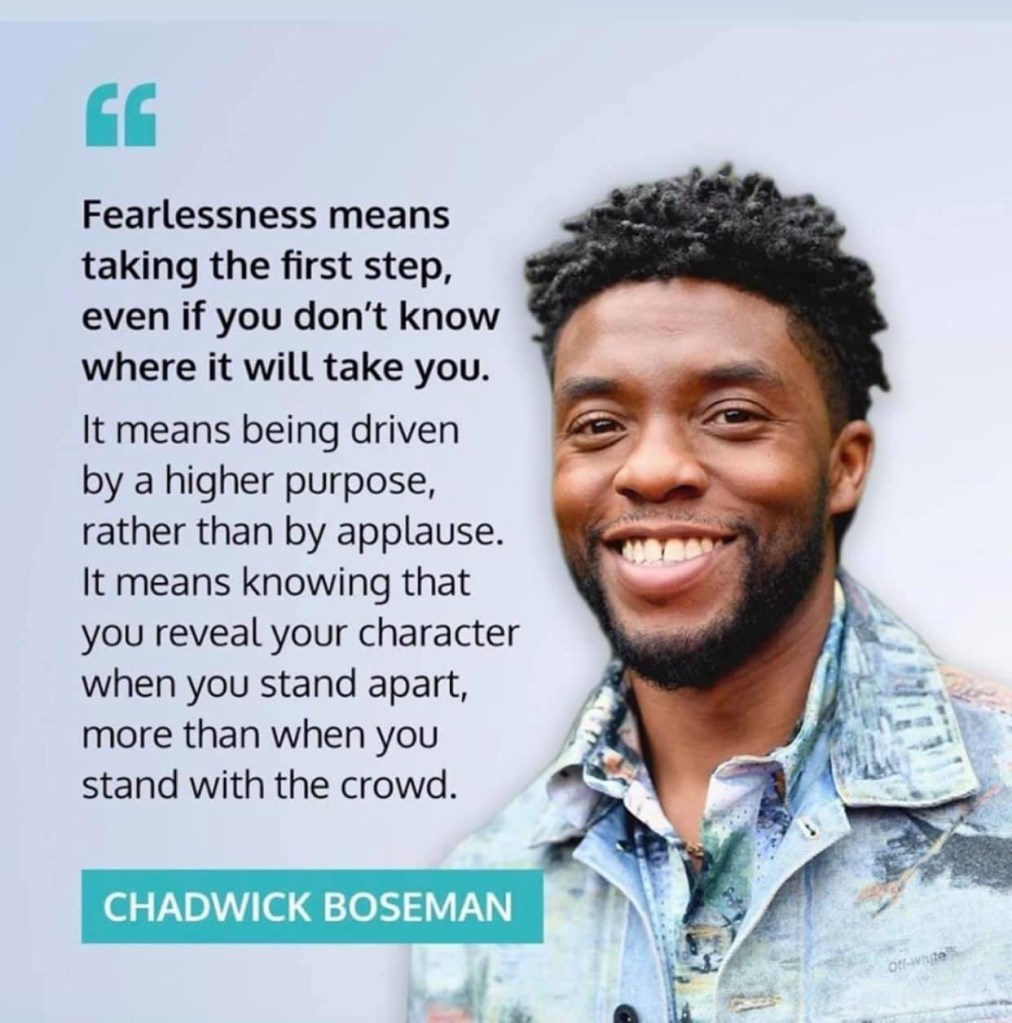
This week, actor Chadwick Boseman passed away from colon cancer at the young age of 43.
Chadwick Boseman. Photo credit: Dan Hallman/Invision/Associated Press
Hearing of his death hurt me deeply. As an avid fan of the Marvel Studios movie franchise, seeing Black Panther for the first time was life changing on many levels as an African American woman. Watching people who looked like me prospering, creating, leading and saving the day on the big screen made my heart burst with pride – because so often Hollywood does not portray us in that manner. We are often relegated to the role of the gangster, the maid, the best friend or a lead character with messy tendencies. In real life we accomplish much of what is portrayed in Black Panther (i.e, girls of color in STEM) – but it is viewed as an outlier not the norm. While undoubtedly the narrative is slowly changing, Chadwick’s portrayal of King T’Challa/Black Panther singlehandedly destroyed stereotypes by the time the opening credits were completed.
Chadwick Boseman as Black Panther. Photo credit: Marvel Studios
In these times, we needed his portrayal more than ever. For two hours and fifteen minutes, I, along with so many others, were transported to a place of equality and justice – a Black utopia – albeit fictional. The Dora Milaje were strong African female warriors who reminded me of the fierce women of color in the real world who command respect while holding the world together behind the scenes. Chadwick’s smooth, effortless cool on screen was only exceeded by the good works he did in real life – as well as his superb portrayals of icons Jackie Robinson, Thurgood Marshall and James Brown.
My father taught me basic African history – great empires such Timbuktu which gave us math; how there was trading and commerce – all the good things before the continent was divided, ravaged and pillaged by slavery and colonialism. Real African history began far before slavery, yet that is where US history classes begin.
As an adult you often get too caught up in day to day life to do the research needed to know our history. Between police shootings, fighting to prove Black lives matter and to make sure the system is actually equal, you get sidetracked away from history.
But Black Panther changed everything. Black folks were like “wait, does this place exist?”
And so the hunt began. Think pieces abounded as to where a modern day Wakanda could be. Some say Kenya, others say Ethiopia. Ghana didn’t miss a beat and in honor of the 400 anniversary of slaves landing in the US, Ghana did the “year of return” to encourage African Americans to reconnect with their roots. Our collective intellectual curiosity was peaked by Chadwick’s and his co-stars’ stellar performances.
Black Panther also took on a different meaning when I went to Johannesburg, South Africa for the first time to lecture at a conference. The contrast really hit home – everyone has a tribe or a people they can point to as their own, complete with language, clothing and customs. I and the other African Americans who were present felt so lost when it came to “where are you from?” Oh, born in NY, family from the Caribbean. It pales to the generations of tribal love and closeness they enjoy. Out of that experience, they gave us African names. Mine was Boitumelo (aka Tumi) of the Tswana people, native to Botswana and South Africa. It means “joy”. As a gift, they presented me with a beautiful handmade dress that I wore when I launched my political campaign this past January as well as on election night, as a reminder that whatever happens – my ancestors are supporting me and are proud. The locals in South Africa referred to the ancestors regularly as a sign of respect as well as to remember their history – much like in the movie.
From Johannesburg with love
My experience was enriched by having seen Black Panther – too often Africa is portrayed as a place of endless war and famine. Black Panther expanded our minds and countered that negative narrative. The concept of hiding greatness in plain sight so that it would not be destroyed resonated with me and so many others.
Losing Chadwick was part of the loss of a fantasy. But it is one that can be made into reality in so many ways. In the end of Black Panther, Chadwick’s character was able to address racism and poverty on a global scale by revealing the power of Wakanda.
The reality is, we are all powerful, and can stand up to address these same issues via the ballot box, building economic power in our communities and rejecting the narratives placed upon us. As King T’Chaka said when he saw King T’Challa and he knelt before him on the ancestral plane “Stand. You are a king”
Chadwick Boseman left an amazing legacy. While it really hurts, to quote the movie “in our culture, death is not the end”. While we mourn him, it is not the end for him or us. We must push forward to honor what was begun by our ancestors – who Chadwick joins on the ancestral plane.
Rest in Power, Sleep in Peace King T’Challa. Wakanda Forever 🙅🏾♀️





 The Resident Legal Diva