Today is the day we honor Dr. Martin Luther King Jr.
In that spirit, I explore his “Letter from a Birmingham Jail” – which provides powerful insight and lessons that we can draw from in today’s fight for equality. See it below!
For me, the last ten years have been a period of major growth. In the last decade:
I met and married my soulmate…
The Cowboy & I at the 2017 Indianapolis 500
I found my voice, stride, confidence and purpose. It took a few setbacks and closed doors to realize what direction I should go; but all of the disappointments came together to lead me to this place.
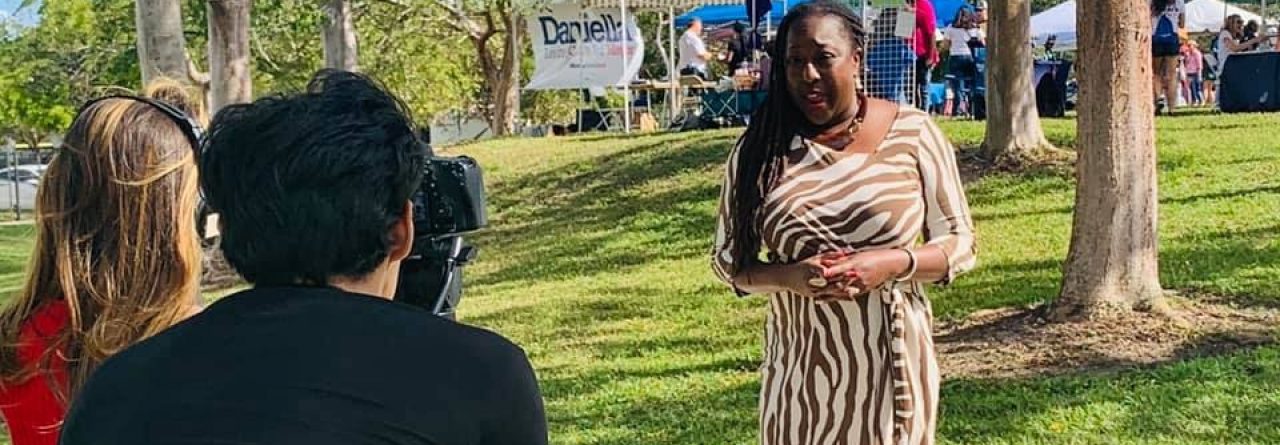
Speaking on South African television in 2019 on gender based violence
I became President of the National Black Prosecutors Association which exposed me to real criminal justice reform work – from sitting in the houses in our community to sitting in the (Obama) White House. I saw the injustices that got perpetuated not necessarily from ill intent, but from not knowing any better (myself included).
I made the big leap of leaving a comfortable sixteen year position as a prosecutor to becoming Deputy Director of the ACLU of Florida. My viewpoints on life were vastly broadened — from learning about the struggles of the transgender community to deepening my work on criminal justice reform and its intersection with voting rights.
I traveled to the Motherland. This year I had life changing trip to South Africa, where I walked in the path of the late great freedom fighter/leader Nelson Mandela. During that time, not only did I see the roots of what would become an international resistance movement, I was able to advocate for the safety of women on an international scale.
South Africa 2019
I survived heartbreak and heartache of losing my mom; but also learned to jealously guard my mental health. Life will throw things at you that you believe you can never overcome. There will be days you can’t get out of bed. But day by day, step by step, it gets better. Be patient, and seek help from a professional if you need it.
Losing her also taught me to be fearless. Life is short; “sit and wait your turn” means you may never get a shot. Seize the day, make your own path and opportunity. Because you may look up and realize that you have less time than you planned on, and what then? Sit in regret? Nope, not me!
My mother and I at on my wedding day in 2012. RIP Mama P.
As we begin the dawn of a new decade, let’s take one final trip down memory lane on the Resident Legal Diva. It’s been such a blessing to be able to write, and share my thoughts with a wider audience. I admit I did not post as much as in previous years — lots going on — but thank you for the love that was received for my writing this year!! Here’s what you read the most from me:
Every Black History Month, I feature female trailblazers of color in the field of law upon whose example I built upon. Jewel Lafontant – Mankarious made history as a trailblazer in the field of prosecution.
This is a piece that continues to resonate with so many professionals of color. It started with an argument on Twitter (yes, this is definitely something to be left in the last decade) where a fellow attorney tried to explain to me that I should not be offended. At the end of the day, folks need to accept the following: if someone tells you xyz is offensive, don’t double down and keep doing it. Just..stop.
Jay Z received backlash over a few things in 2019; this one I don’t believe was justified at all. As we look at economic equality and gentrification, people of color are always on the receiving end of the push out, and never on the benefits. When gentrification arrives, it’s people of color who have to move further away from their jobs or conveniences we take for granted. Companies expand into newly gentrified neighborhoods, but it does not provide the jobs and economic advancement for the people who originally lived there. So now what? More incentives should be provided so that people do not have to leave their neighborhoods. And, as people of color get more means, we need to buy up the block so that no one else does. We have to empower our own neighborhoods — as well as protect our history.
The Jussie Smollett case garnered a great deal of attention on the role of a prosecutor — and how discretion should be used. I analyzed the case in the context of having done this work. Was everything handled perfectly? No, nothing ever is. But the backlash was excessive, and rooted in racism.
Cheryl Mills is known for her defense of President Bill Clinton during his impeachment hearing. She is the first African American to address the United States Senate in her capacity as Associate Counsel for the President.
Clearly my readers love the posts on history, and I will endeavor to share more in the coming year!
More challenges lie ahead in the next few years, but I am excited to be able to continue serving the greater good and putting my criminal justice expertise to work.
Wishing you an amazing New Year and new decade. Thank you for reading, your comments and your support. May you find prosperity, happiness, and grow in your purpose!!
He is someone I knew well — I practiced against him when he was a defense attorney, and before him when he became a judge. I never had an inkling of any racial animus in the way he referred to his clients or those before him.
But, there you have it — an “unnamed attorney” reported the comments two years later.
You read that right — two full years.
If you are a defense attorney, charged with protecting the interests of your clients (who, due to many systemic reasons are overwhelming black and brown), why do you sit on that information for two years?
How does one let a judge who is purportedly racist sit on the bench for two years — presiding over cases, and the fate of other black and brown people when you allegedly knowthe person is racist?
To give some context, judges in Miami-Dade County easily hear hundreds of cases a week. So for 104 weeks, someone who purportedly held racist views was able to affect the lives of many defendants.
It was said that the attorney feared “repercussions” — what about the repercussions to the affected persons whose life and liberty hung in the balance?
This, to me, says one of two things: either 1) the attorney did not view the conduct as that egregious; or 2) there is an ulterior motive.
This is yet another reason why diversity in the legal field is so critical. When there are more defense attorneys, prosecutors and judges of color, we will have less instances like these.
It’s not a cure, but it’s a start.
If you are not a person of color, and want to be an ally in the struggle for racial equality, here are a few tips.
Don’t condone racial slurs. If it’s said around you, give a full-throated repudiation those statements. Folks continue to speak that way if they think it’s ok and can get away with it.
Provide evidence to help the struggle. Take a page out of Deborah Baker-Egozi’s book, where she bravely filmed an officer using excessive force on a man of color, and offered the man legal representation.
Use your voice and privilege to help the struggle. Shine a light on these issues, and raise awareness in circles that people of color do not have access to.
Be aware of your own biases, and work on them. Take the Harvard implicit association test, which helps show where your biases lie. Once you know, work on it. Pause before you make decisions — are you making a decision based on assumptions, stereotypes or pure hard facts?
Engage with people who do not look like you. Let’s be clear — having a “black friend at work” doesn’t cut it. You need to go to events, places of worship, and do things on your downtime that are outside of your comfort zone. It has to be a choice for one to say s/he is fully engaged.
In this instance, I blame the judge for his comments, and the attorney for staying silent for so long.
Both are different sides of the same coin.
Sitting idly by as injustices occur is not the definition of being an ally.
I’m starting a #TBT (aka Throwback Thursday) series to share past posts that are relevant today. It was pretty crazy to realize I have shared 175 posts in the last 3 years on The Resident Legal Diva. The recurring themes of race, criminal justice, and living together as Americans are close to my heart.
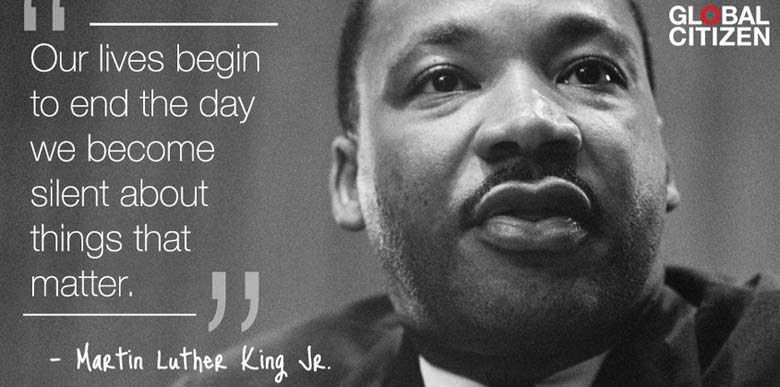
So in light of my piece on Colin Kaepernick, and the debates we are having as a result of his actions as well as the elections, please take a look at my multi part series from 2014 “Knowledge Trumps Racism“. More importantly, I’ll start you at the end of the series, written on MLK day of 2015, which talks about standing up for what you believe in.
Back in November, I had the honor and the privilege of speaking as President of the National Black Prosecutors Association on a roundtable at Harvard Law. Fellow participants included head prosecutors from around the country, and forward thinkers in the criminal justice world, led by the Vera Institute. We discussed issues of racial disparity in sentencing, ways to ensure that everyone gets the same treatment for the same types of crimes/criminal history, and other ways to make our system better. See my interview here on diversity and unconscious bias in the criminal justice system.




 The Resident Legal Diva