

Is Getting Your Own Confession A Good Idea?

jamie x

Originally published on theLaw.tv on January 24, 2014  Getting Your Own Confession

A Los Angeles woman has grabbed headlines this week with her viral YouTube video confrontation. In this video, “Jamie X,” as she is calling herself, confronted her high school teacher, who allegedly molested her many years ago. Jamie says the abuse started when she was 12, going on for several years; she is now 28. One of the reasons that Jamie made the call at this point is because she discovered her alleged abuser is now an assistant principal. The YouTube clip shows Jamie calling the teacher on the phone, and asking why the teacher manipulated her and took advantage of her position. The female teacher responded by admitting to her actions, as well as saying that she “regrets” what she did.

The video is very emotionally charged, as well as tragic. But is the video going to be admissible in court? Should Jamie X have done this controversial act?

In most states, you are not allowed to video or tape record another person without their permission. There is an exception is for law enforcement personnel, who can do so with a warrant from a judge. Of course, getting a warrant is not that easy. The police officers have to set forth their case to the judge, showing probable cause, what crimes they hope to solve, and how the target of the surveillance is connected to those crimes. The reason behind this is to prevent an invasion of your privacy. In California, the law is very clear – you cannot tape a private conversation unless both parties to the conversation give permission.

In spite of the law, was it even a good idea? In all likelihood, the video will not come in as evidence at trial. But the video was helpful for several reasons. As a result, Jamie  had evidence to present to the police to jump start an investigation. There is a very liberal statute of limitations on child abuse cases, since by the very nature of the crime, reporting is often delayed. Children are abused while they are young, and as they reach adulthood, they then realize that what happened to them was wrong. Sometimes molestation victims suppress the memories, which come back to them many years later. Manipulation is a big part of a child molester’s plan. At the point of adulthood, they have the strength to tell; they are better able to break the hold of the guilt and mind games of the abuser that held them hostage. However, with the delay comes a loss of evidence. This video gave police a starting point. Hopefully, if the teacher confesses once, she will confess again.

The other good part about the video is another victim has come forward as a result. While the teacher said on the video that Jamie X was the only victim, another young woman came out today, stating that she had an identical experience with this teacher. The revelation strengthens the case, and can possibly result in multiple charges of child abuse with multiple victims in the same case.

Is it the best idea to get your own confession? No. It is better to speak with local law enforcement and let them do a thorough investigation. You don’t want to taint any potential evidence from your actions, not to mention the possibility putting yourself at risk.

No matter what happens, hopefully Jamie is able to get the closure she so desperately needs.
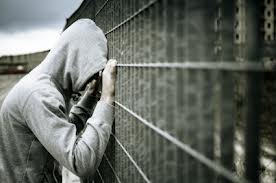
Detention or Jail? New Choices for Disruptive Students

Image

The school to prison pipeline. You may have never heard of it, but it is a growing issue.  Across the nation, students are being arrested for minor offenses.  Offenses that twenty years ago, would have gotten the student sent home, given detention, or at worst, suspended. Now, students are getting criminal records for misdemeanor charges such as loitering, trespass, and disorderly conduct — which boils down to fighting, staying on school grounds after hours, or being disruptive in class.

Last week, the country’s 6th largest school district, located in Broward County, Florida, took a large step in a new direction.  The superintendent of Broward County schools came together with the state attorney’s office, the police department, and the NAACP to empower school principals to decide when and how students would be arrested.  In the past, it was the school resource officer who made these determinations. The NAACP became involved, because they noted that a large amount of those arrested were students of color…and their peers were receiving warnings instead.

The new policy states that for non-violent charges like trespassing, harassment, incidents related to alcohol, possession of a misdemeanor amount of marijuana and drug paraphernalia, school officials are to work it out in house without an arrest. Options for punishment, in addition to traditional means, include participation in a week-long counseling program. No student would be arrested for a first time non-violent misdemeanor, but repeat offenses will receive an escalation in punishment. After a fifth incident, students are referred to law enforcement. The police will still handle felonies or serious threats.

This school to prison pipeline issue may be occurring as a result on our shifting society. In years past, there was a parent or relative that would be available to take a child from school.  Schools were more engaged with the family and the community. Now, with many parents working more than one job to make ends meet, or are the head of a single parent household, it is easier for the school to call the police than for the parent to leave work.  Some parents may be short on patience, and hope that an encounter with the criminal justice system will “scare them straight”.  Other parents may have deeper issues preventing them from being a role model and disciplinarian. On the other side, many schools and teachers are overworked as well as underfunded.  “Zero tolerance”, rather than taking the time to work with the child, is perceived as easier when resources are stretched thin.  Lastly, many beneficial after school programs, including organized sports, arts/crafts, and meals programs, have been cut in an attempt to save money.  These programs are instrumental in keeping kids on the right track, keeping them busy with positive activities. In these days of recessions and budget cuts, lawmakers need to be mindful of the trickle-down effect the lack of programming has, including an increase in criminal activity.

The key problem lays in the fact that very rarely does the criminal justice system help a child.  That initial contact often lays the groundwork for repeated criminal conduct, due the child being exposed to more experienced teens. Additionally, the child now develops a criminal record, which becomes a problem when applying for jobs, as well as financial aid for college.

The bottom line is, it takes a village to raise a child. As a prosecutor, I handled juvenile cases early in my career. The majority of the kids I saw were not bad kids.  It was the usual mischief that kids have gotten into from the beginning of time.  But putting kids in the system without addressing the underlying issues that caused the behavior is a formula for disaster.  Broward County has already seen a decrease in arrests as a result of this program, with positive feedback being given all around.  I hope that other school districts take their rightful place as a safe haven for learning, rather than a route to prison.

Published on theLaw.tv November 12, 2013.  http://news.thelaw.tv/2013/11/12/detention-or-jail-new-choices-for-disruptive-students/

Follow me on Twitter @ResLegalDiva.