Another day, another shooting

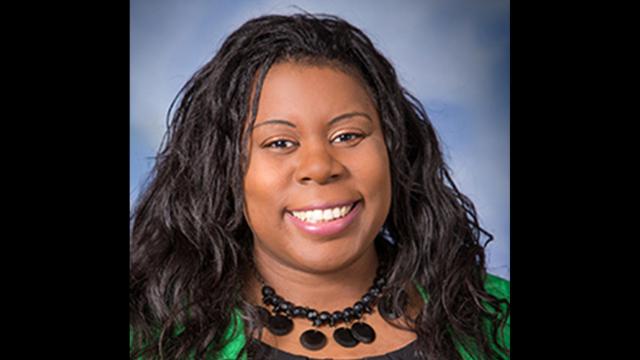
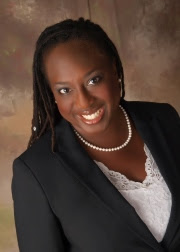
Dr. O'Neal
Photo credit: Franciscan Health
Dr. Tamara O’Neal died in a shooting at Mercy Hospital on Nov. 19, 2018.

Another day, another shooting where multiple lives were lost.  This time, it was in a a place designed to save lives — Mercy Hospital in Chicago.

Dr. Tamara O’Neal was the victim of domestic violence. The shooter was someone she was in a relationship with. Three other lives were lost: Pharmacy Resident Dayna Less, and Officer Samuel Jimenez. Officer Jimenez had been on the police force for less than three years.  The gunman Juan Lopez also died.

The whole incident is heartbreaking, especially after the NRA made a big to do by telling doctors they should “stay in their lanes” and not have discussions about firearms with their patients. Interestingly, last year, the ACLU at Florida successfully sued for the First Amendment right of doctors to be able to talk to their patients about gun safety in a case commonly known as “Docs v. Glocks“. The importance of doctors having such conversations is that it can lead to a discussion as to whether or not the patient feels safe in their own home. Revelations of domestic violence open up the door to the resources that are available to victims.

There is a narrative that if  a victim arms herself  that somehow domestic homicide could be prevented. Let’s think through this particular situation. Is a doctor going to go from surgery to surgery, patient to patient with a gun strapped to her back? It’s not practical. Domestic violence calls are one of the most dangerous calls any police officer can respond to because of the volatility of the situation. If it is unsafe for a trained professional, how is it any safer for a civilian? Additionally, how many of us (especially in communities of color), remember the case of Marissa Alexander? She fired a warning shot during a domestic violence situation, and ended up in prison.  This leads to a question with regards to equality of 2nd Amendment enforcement across racial lines (but that is the next installment –stay tuned!).

One of the reasons why I vocally opposed Marsy’s law in the state of Florida is the fact that it provides no resources to victims of crime. Nationwide, there has been a strain on budgets to protect survivors of domestic violence. Shelters are operating on a shoestring budget. Some shelters cannot accommodate whole families especially if the children are over a certain age, or are male. DV service providers often rely on the kindness and donations of others rather than robust government funding. The Violence Against Women Act (VAWA) provides a source of funds, but more is always needed.

Women of color are  more likely than their white counterparts  to be victims of domestic violence, and for it to be more fatal. Again, it comes down to access and networks of assistance. If you are wealthier, you may be able to finance your escape from your abuser. If you are in a lower social strata, it is more difficult for you to be able to pick up and leave. It’s even more difficult if there are children involved. Think about it: you have to come up with a first, last and security deposit, in a place that is not near your abuser, as well as buy furnishings and make sure that your children’s education is not interrupted. Meanwhile, you need to maintain your full-time job. We all know that jobs are not easy to come by.

This heartbreaking scenario and loss of lives should be a call to action. Not for more guns, but for more resources so that victims and survivors can start their lives over again. Aspects like counseling, shelter, relocation, and more police presence if required are critical to successfully escaping an abusive relationship. Employers should be required by law give days off to verified domestic violence victims so that they can attend court hearings, get a restraining order, or to move if necessary. Also, it should be mandatory for workplaces to train with regards to domestic violence situations, so that if such an issue is brought to their attention, they know to know to notify security or take extra steps to make sure the abuser does not gain access to the workplace.

To be clear, my points about the lack of resources is not to dissuade victims from leaving — it is to raise awareness about the challenges surrounding domestic violence as well as ways we can do better as a society. If you or someone you know is a victim of domestic violence, you do not have to suffer in silence.  Click here for resources.

May Dr. O’Neal and all of the victims rest in peace. May their families find comfort and healing. And may their deaths not be in vain — but instead, stimulate discussion, legislation and change around the issue of domestic violence.
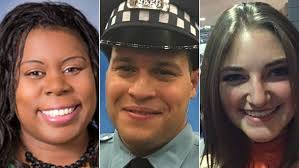
chicago victims
Victims of Mercy Hospital Shooting: Dr. Tamara O’Neal, Officer Samuel Jimenez, Dayna Less. Photo Credit: CNN


Delay the Vote & Support Victims

RLD Family,

I shared this as a letter to the membership of the Gwen S. Cherry Black Women Lawyers Association.

I share this with you, because we are in a pivotal moment in our country.

Statistically, we are all either survivors of sexual abuse or close to someone who is.  Be kind to each other. But even more important, take action.

STATEMENT ON JUDGE BRETT KAVANAUGH CONFIRMATION PROCEEDINGS

https://gallery.mailchimp.com/7792c9a2e70fd039ce534a3a9/images/208c4904-8ab6-487e-a12b-11753da12fd1.jpgLike many of you, I saw the testimony of Dr. Christine Blasey Ford and Judge Brett Kavanaugh yesterday.

It was a tough day.

I remember 27 years ago when another victim came forward— Anita Hill. She was lambasted as a political plant and trying to “hold a good black man down”. Her story was dismissed, with her name being shamed. We later discovered there was corroborating evidence of her statement that was withheld in order to assure the confirmation of Clarence Thomas.

Here we are again. Multiple women have come forward, with one testifying before the Senate Judiciary Committee. Dr. Ford reminded me of so many victims I worked with as a prosecutor— frightened, embarrassed, yet determined to tell her story.

But what is different than a criminal trial is that Dr. Ford was not facing a jury of her peers. She was facing a group of mostly older white men, who wished for her to disappear.

To be clear, GSCBWLA is nonpartisan. But we stand for justice and the rule of law. We join the American Bar Association in calling for the FBI to conduct a full investigation to ensure that the same mistakes made with Anita Hill are not repeated. This is the highest judicial office in the land, with the ability to change the country for decades to come. It can’t be rushed; it must be gotten right. I have to note that while there were intellectual disagreements about the viewpoints of Justice Neil Gorsuch, not one person came forward to question his integrity or decency. The same applies to every other sitting justice, with the exception of Justice Thomas.

Lastly, but most importantly, I must address those brave individuals — male and female — who have survived sexual assault or abuse. We stand with you. We believe you. Please practice self care, because the pain of watching the news this week can trigger the past and be emotionally damaging. Seek professional counseling if you need it. The Florida Bar has resources; if you attended the WLOC Summit, one of our presenters, Dr. Delvena Thomas, specializes in emotional trauma

Every 98 seconds, an American is sexually assaulted. Every 8 minutes, that victim is a child. 6 of every 1000 offenders go to prison. 2 out of 3 sex assaults go unreported. 

These numbers are a reminder why we need to lift up victims, and end the cycle of rape culture.

If you want to take action, call Senator Marco Rubio (or the Senator in your home jurisdiction) and tell him to delay the confirmation at 202-224-3121.

Additionally, you can volunteer at a domestic violence or rape crisis shelter to provide help to women in need.

The takeaway for me is that more women need to run for office – especially the Senate – to end the chokehold of the old boys club. We have miles to go on the topic of sexual assault in America. But nothing is impossible – every journey starts with a single step.

In solidarity,

Melba V. Pearson, Esq.
President
Gwen S. Cherry Black Women Lawyers Association

Wills Are For Us Too!

Hey RLD Family! I took a bit of a summer hiatus..but I’m baaaack! It’s time to explore the importance of wills, especially for people of color. This is my first piece published for the blog The 94 Percent.

aretha
Aretha Franklin

Aretha Franklin. Prince. Bob Marley. Barry White.  Marvin Gaye. Tupac. The list of celebrities of color that have died without a will goes on and on.

As we grieve the latest loss of musical icon, the Queen of Soul Aretha Franklin, we should also take the opportunity to learn some lessons. Many in our community seem to think that wills are for white people. As a result, they do not seek the protections they need and often die intestate (without a will).

This is dangerous for a lot of reasons.

Please see the rest of the story here.

Betrayed By the Bench?

n-CRIMINAL-JUSTICE-RACE-628x314
Photo credit: ONEWORD VIA GETTY IMAGES

This morning, it was reported that Judge Stephen Millan used racial slurs as a judge.

It’s a tough pill for me to swallow.

He is someone I knew well — I practiced against him when he was a defense attorney, and before him when he became a judge. I never had an inkling of any racial animus in the way he referred to his clients or those before him.

But, there you have it — an “unnamed attorney” reported the comments two years later.

You read that right — two full years.

If you are a defense attorney, charged with protecting the interests of your clients (who, due to many systemic reasons are overwhelming black and brown), why do you sit on that information for two years?

How does one let a judge who is purportedly racist sit on the bench for two years — presiding over cases, and the fate of other black and brown people when you allegedly know the person is racist?

To give some context, judges in Miami-Dade County easily hear hundreds of cases a week. So for 104 weeks, someone who purportedly held racist views was able to affect the lives of many defendants.

It was said that the attorney feared “repercussions” — what about the repercussions to the affected persons whose life and liberty hung in the balance?

This, to me, says one of two things: either 1) the attorney did not view the conduct as that egregious; or 2) there is an ulterior motive.

This is yet another reason why diversity in the legal field is so critical.  When there are more defense attorneys, prosecutors and judges of color, we will have less instances like these.

It’s not a cure, but it’s a start.

If you are not a person of color, and want to be an ally in the struggle for racial equality, here are a few tips.

  1. Don’t condone racial slurs.  If it’s said around you, give a full-throated repudiation those statements.  Folks continue to speak that way if they think it’s ok and can get away with it.
  2. Provide evidence to help the struggle.  Take a page out of Deborah Baker-Egozi’s book, where she bravely filmed an officer using excessive force on a man of color, and offered the man legal representation.
  3. Use your voice and privilege to help the struggle. Shine a light on these issues, and raise awareness in circles that people of color do not have access to.
  4. Be aware of your own biases, and work on them.  Take the Harvard implicit association test, which helps show where your biases lie.  Once you know, work on it.  Pause before you make decisions — are you making a decision based on assumptions, stereotypes or pure hard facts?
  5. Engage with people who do not look like you. Let’s be clear — having a “black friend at work” doesn’t cut it.  You need to go to events, places of worship, and do things on your downtime that are outside of your comfort zone.  It has to be a choice for one to say s/he is fully engaged.

In this instance, I blame the judge for his comments, and the attorney for staying silent for so long.

Both are different sides of the same coin.


Sitting idly by as injustices occur is not the definition of being an ally.

It’s being part of the problem.


The Diva on the Sunday Roundtable: Guns, Activism & the NRA

Hi RLD Family!

I had the privilege of being on the Channel 10 South Florida Roundtable this past Sunday. We took on some tough issues surrounding the recent bill passed by the Florida legislature in response to the tragic school shooting in Parkland, Florida. While some aspects are good (increased funding for mental health), many have concerns as to how this will eventually affect students of color.

Check out the footage here and share your thoughts!!

M.